

PILES
(HAEMORRHOIDS)
What is piles?
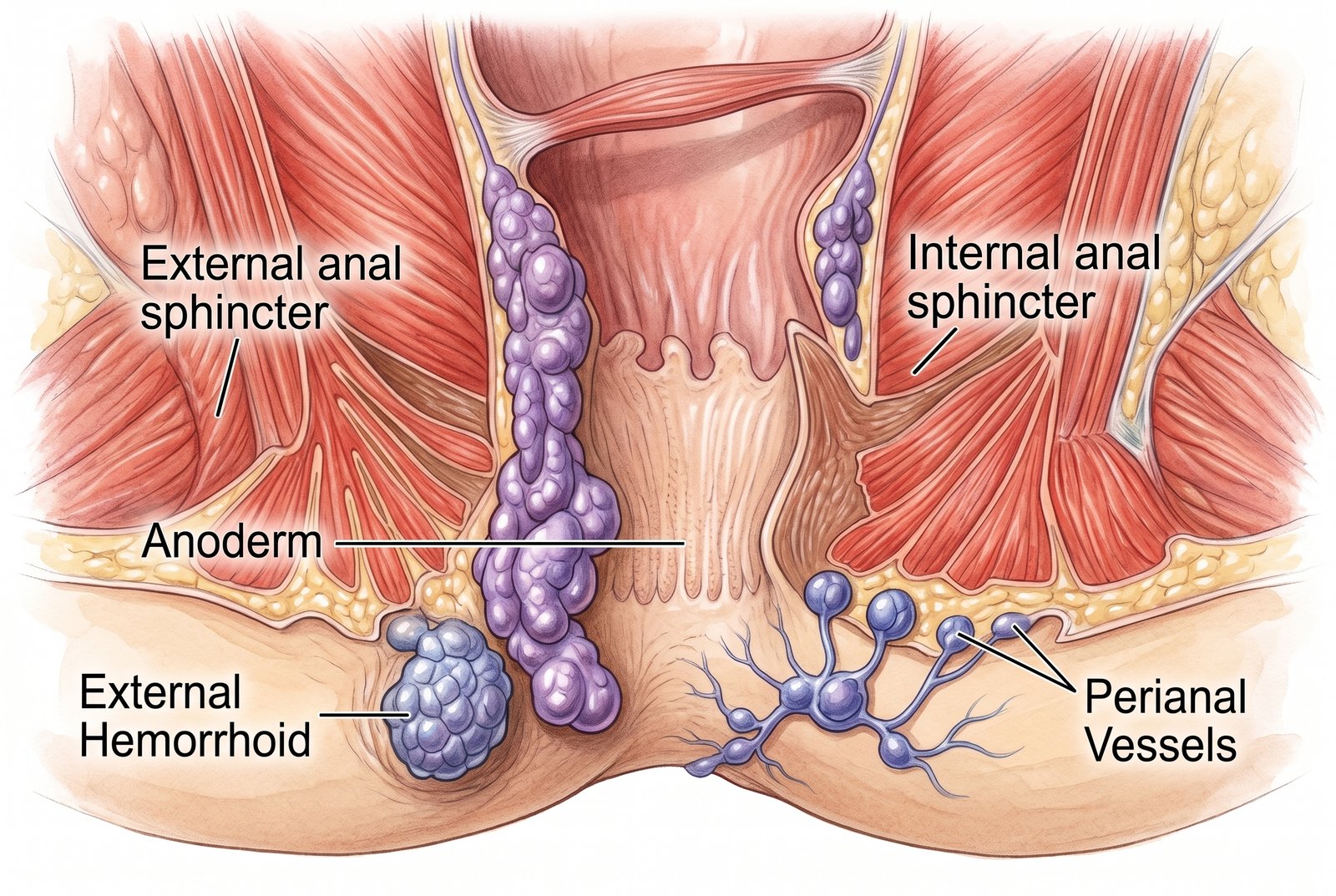
Piles (haemorrhoids) are swellings that can occur inside and around the back passage (anus) and the anal canal. The anal canal is the last part of the large intestine and is about 4 cm long.
There is a network of small veins within the lining of the anal canal. These veins sometimes become wider and engorged with more blood than usual, forming small swellings called piles.
Internal Piles
Form 2-4cm above the anus. Usually painless because the upper anal canal has no pain nerve fibres.
External Piles
Occur on the outside edge of the anus. May be painful due to high concentration of pain nerve fibres.
What is causes?
Straining during bowel movements.
Sitting for long periods of time on the toilet.
Chronic diarrhea or constipation.
Obesity and lack of weight control.
Pressure during pregnancy.
Anal intercourse irritation.
A diet low in dietary fiber.
Symptoms
Feeling Full
A feeling that the bowels are still full after going to the toilet.
Bleeding
Bright red blood noticed after a bowel movement.
Itchiness
Persistent itchiness around the anus.
Discharge
Mucus discharge when emptying the bowels.
Pain
Pain experienced while defecating.
Skin Soreness
Area around the anus may appear red and sore.
Signs
Painless bleeding — small amounts of bright red blood on tissue or in the bowl.
Itching or irritation in your anal region that is persistent.
Pain or discomfort during bowel movements or physical activity.
Swelling or lumps felt around the anal opening.
How to its prevention?
Hydration
Take at least 6-8 glasses of water daily to keep stools lubricated.
Weight Control
Reduce weight since obesity is a major risk factor for piles.
Exercise
Regular physical exercise helps in weight reduction and bowel movements.
High Fiber
Avoid constipation by eating fresh fruit, vegetables, and bran cereals.
Bathroom Habits
Do not read on the toilet. Aim to be out within a minute to avoid strain.
Don't Strain to Finish
People with piles often think there is more to come, but this is a false sensation caused by the piles themselves. Do not strain after passing faeces.
Care for Lumps
If you can feel a lump, try pushing it gently upwards while relaxing your anus. Avoid scratching the area to prevent further irritation.
What is Treatment?
"Treatment is determined according to the stages as well as the degree of piles."