

What is Pilonidal Sinus?
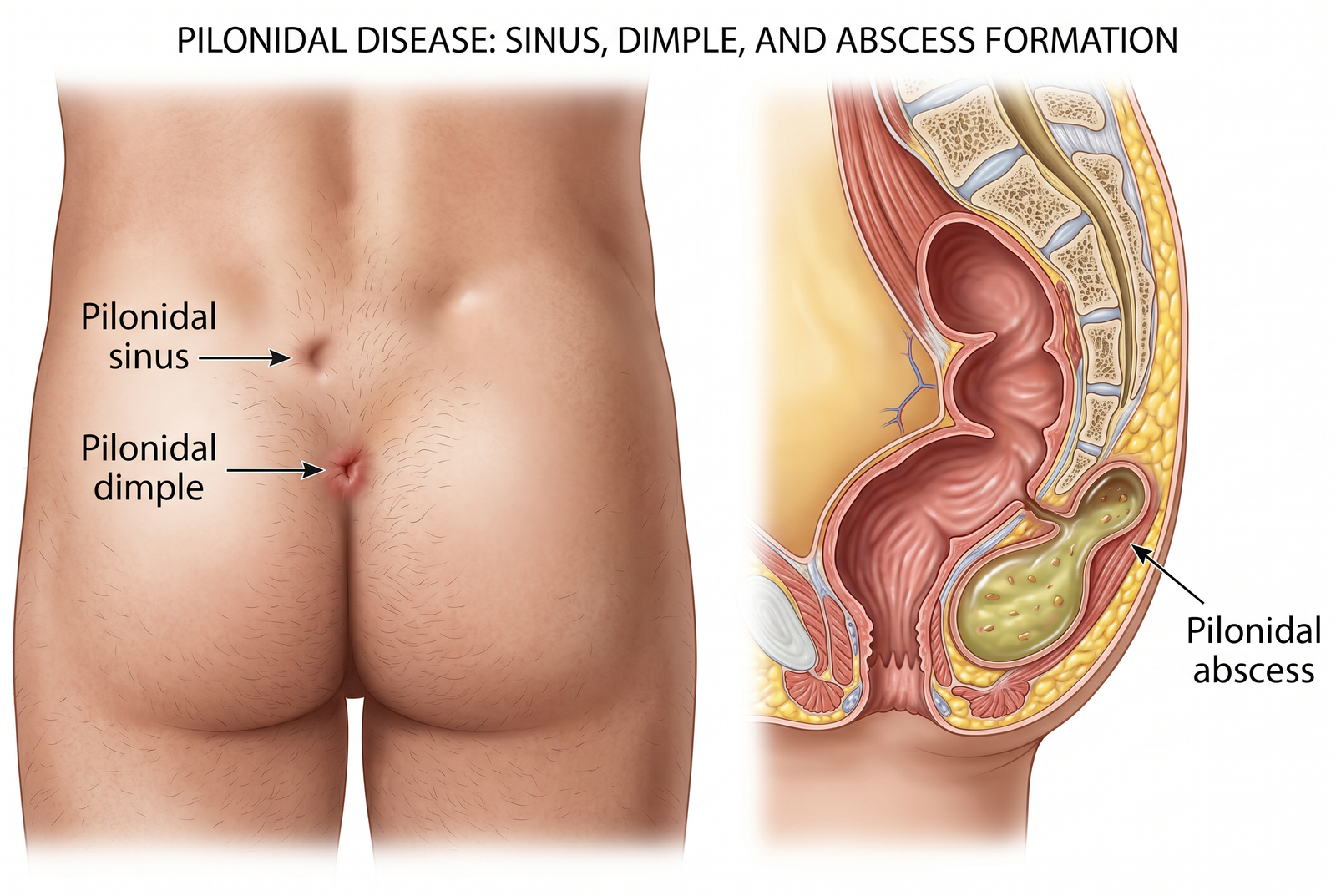
A pilonidal sinus (PNS) is a small cyst or abscess that occurs in the cleft at the top of the buttocks. Pilonidal means a 'nest of hairs'.
Definition & Nature
A PNS usually contains hair, dirt, and debris. It can cause severe pain and often become infected, oozing pus and blood with a foul odour.
A sinus tract is a narrow tunnel typically between a focus of infection in deeper tissues to the skin surface, discharging pus from time to time.
What is causes?
Hair Follicles
Ingrowing hairs are the most common cause. It is common to find hair follicles inside the sinus.
Injury & Irritation
Can appear after an injury to the sacrococcygeal region or irritation from riding in bumpy vehicles.
Risk Factors
- Sedentary job
- Obesity
- Deep natal cleft
- Family history
Historical Fact: 'Jeep Seat'
Common in army jeep drivers due to hours of bouncing on hard seats, causing irritation and pressure around the natal cleft.
What is Symptoms?
Pain and swelling at the bottom of the spine.
Reddening of the skin (Abscess formation).
Drainage of pus or blood from a skin opening.
Foul smell from draining pus.
Raised temperature with any above symptoms.
No symptoms? Keep area clean and shave hairs.
What is
treatment?
Early intervention can prevent a sinus from developing into a severe abscess requiring surgical incision.
Warm Baths
Sitting in a warm bath may decrease pain and progress of the infection.
Medical Advice
Consult a doctor if symptoms occur. Antibiotics alone do not improve it.
Clinical Perspective
"A pilonidal cyst is an abscess or boil. It needs to be drained, or lanced, to improve."
- 01. Professional incision and drainage required.
- 02. Clearing of hair nests and infected debris.
- 03. Maintaining absolute hygiene and dryness.
- 04. Regular hair removal from the affected cleft.