

ANAL
ABSCESS
What is Abscess?
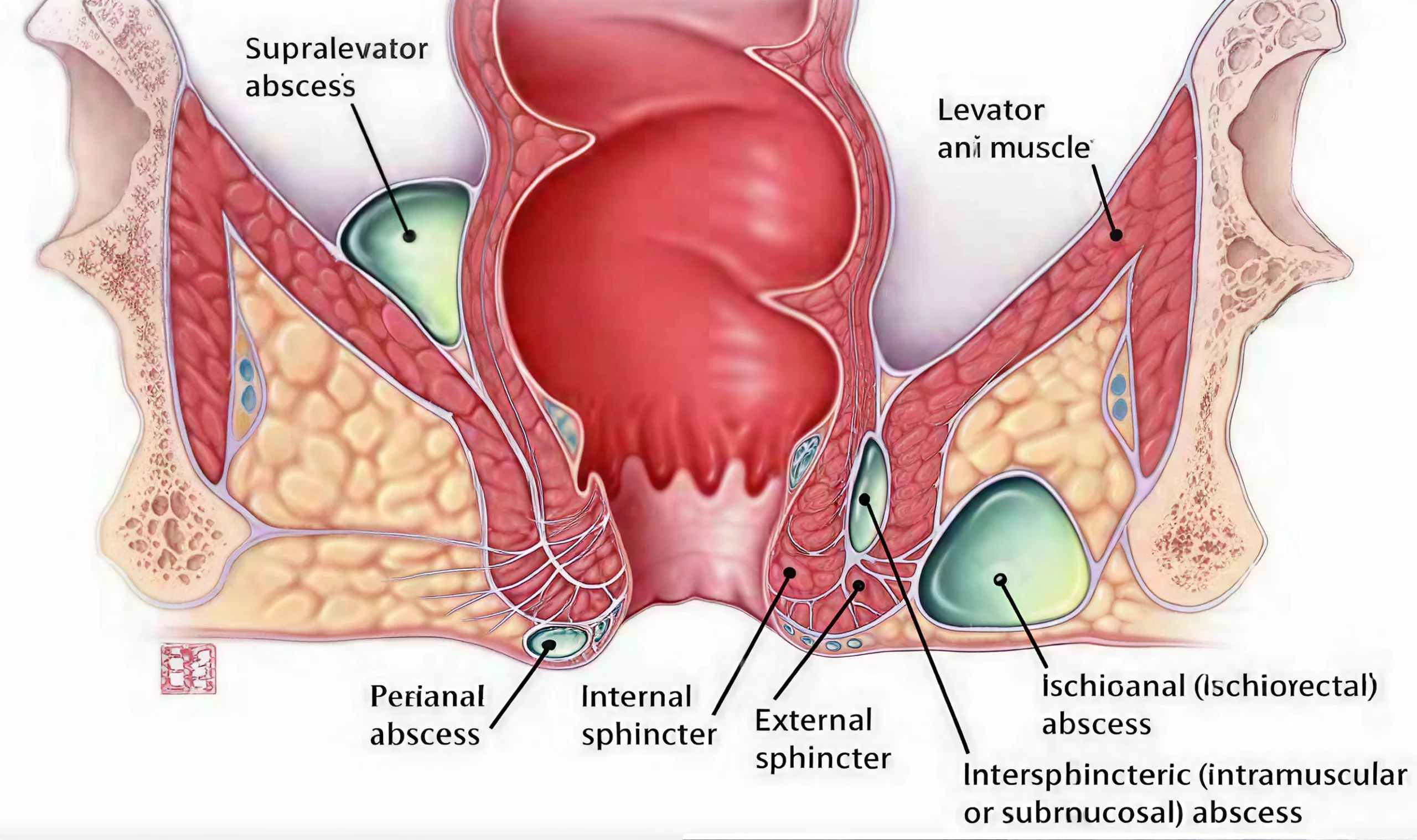
An anal abscess is an infected cavity filled with pus found near the anus or rectum. Ninety percent of abscesses are the result of an acute infection in the internal glands of the anus.
Bacteria, fecal material, or foreign matter can clog an anal gland and tunnel into the tissue, where it collects in a cavity called an abscess.
Perianal
Painful boil-like swelling near the anus. Often red and warm to the touch.
Perirectal
Forms from blocked anal gland ducts. Progression into deeper anal spaces.
The Fistula Connection
About 50% of anal abscess patients will develop a complication called a Fistula—an abnormal tunnel between the abscess site and the skin.
- Persistent drainage issues
- Risk of recurrent abscesses
- 25% risk in perirectal cases
Causes & Risk Factors
Blocked Glands
Clogged ducts in the anal area are the primary origin.
Fissure Infection
Infection stemming from an existing anal fissure.
IBD / Crohn's
Intestinal disorders like Crohn's disease or diverticulitis.
Weakened Immune
Weakened systems due to HIV/AIDS or chemotherapy.
STIs
Sexually transmitted infections from anal intercourse.
Diabetes
Increased susceptibility to bacterial infections.
Medications
Prolonged use of corticosteroid medicines.
Infant Care
Toddlers in diapers with a history of fissures.
What is symptoms?
Throbbing Pain
Anal Swelling
Pus Discharge
Fever & Chills
Night Sweats
Fatigue
Constipation
Bowel Pain
Redness/Hardening
Infant Irritability
What is treatment?
"Abscesses rarely go away on their own. Antibiotics alone usually cannot treat an abscess."
Surgical Drainage
Surgery to open and drain the abscess is necessary. Stitches are usually not needed.
Sitz Baths
Warm water baths help relieve pain, reduce swelling, and facilitate drainage.
Medications
Prescription of pain medication, antibiotics, and stool softeners to assist healing.
Dietary Care
Maintain a soft or liquid diet and practice superior hygiene until fully healed.
Recovery Risks
How to prevention?
Safe Habits
Use condoms during intercourse and seek prompt treatment for STIs to prevent infections.
Infant Hygiene
Frequent diaper changes and proper cleaning to prevent fissures and subsequent abscesses.
General Hygiene
Maintain good hygiene in the anal area as a safeguard for both children and adults.
Anal Abscess • Rectal Abscess • Perirectal Abscess • Perianal Abscess • Anal Gland Abscess • Anorectal Abscess
Specialized Consultation
Early diagnosis and surgical intervention are vital. Book an appointment for professional drainage and care.
Book Appointment