

ANAL WARTS
What is Anal warts
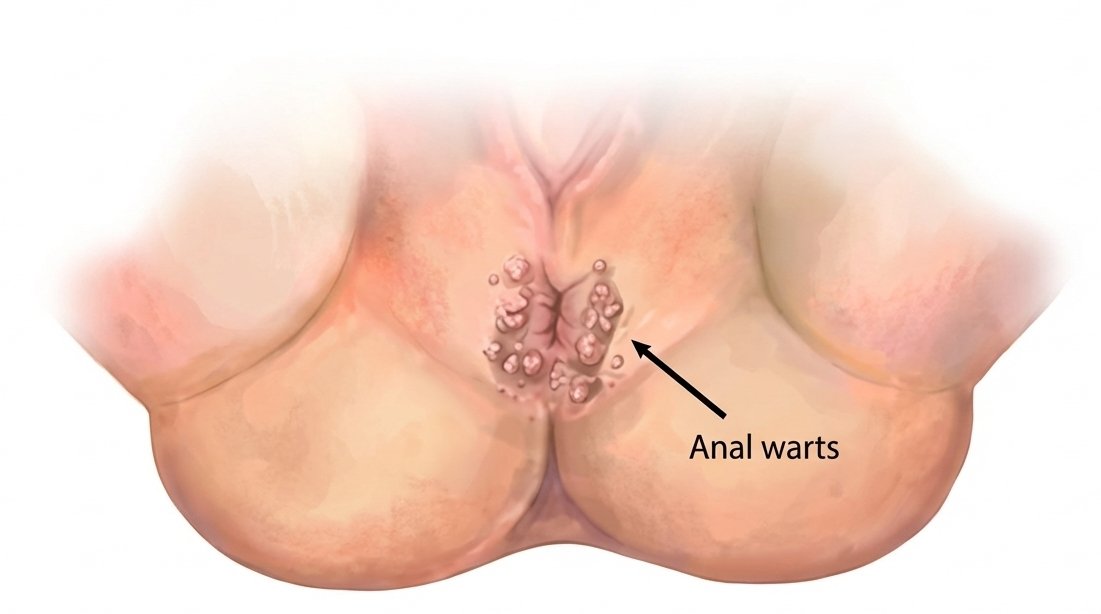
Anal warts, also known as condyloma, are growths found on the skin around the anus (rectal opening) or in the lower rectum.
A person may develop anal warts months after coming in contact with an infected person. The warts appear as small flesh-coloured to gray bumps that may gradually increase in size. They may be single or many. They may be flat or hang on short stalks. They may be smooth or irregular resembling a small cauliflower. Smaller warts may join together to form bigger warts.
HPV Related
Caused by the Human Papilloma Virus (HPV).
Highly Contagious
Transmitted via direct skin-to-skin contact.
What is symptoms?
No Symptoms
Many patients with anal warts have no symptoms.
Small Growths
Some patients may notice small growths in the anal area.
Discomfort
Itching, occasional bleeding, or moisture in the anal canal.
What is signs?
Feeling of a mass
Bleeding
Itching
Mucous discharge
Ulcer formation
WHAT IS CAUSES?
Understanding the root cause is the first step towards effective treatment and prevention.
They are caused by the human papilloma virus (HPV), which is transmitted from person to person by direct contact.
HPV is considered a sexually transmitted disease (STD).
You do not have to have anal intercourse to develop anal warts.
Since many individuals may be unaware that they suffer from this condition, sexual abstinence, condom protection or limiting sexual contact to single partner will reduce your potential exposure.
Anal warts are caused by the HPV virus, which is usually transmitted through sexual contact but not necessarily through anal intercourse.
How to prevention?
There are several ways to prevention this virus from spreading:
Sexual partners should be checked even if they show no symptoms.
Refrain from sexual activity until clinical treatment is fully completed.
Use condoms. They offer some, but not complete, protection. Following these suggestions lessens recurrence chance.
Additional Precautions
Take the necessary precautions to prevent trauma to the area, which can result in bleeding.
Be careful to prevent transmission to a sexual partner during the recovery phase.
Because the warts themselves are infectious, avoid touching them. Do not pick or squeeze the warts.