
What is Fissure?
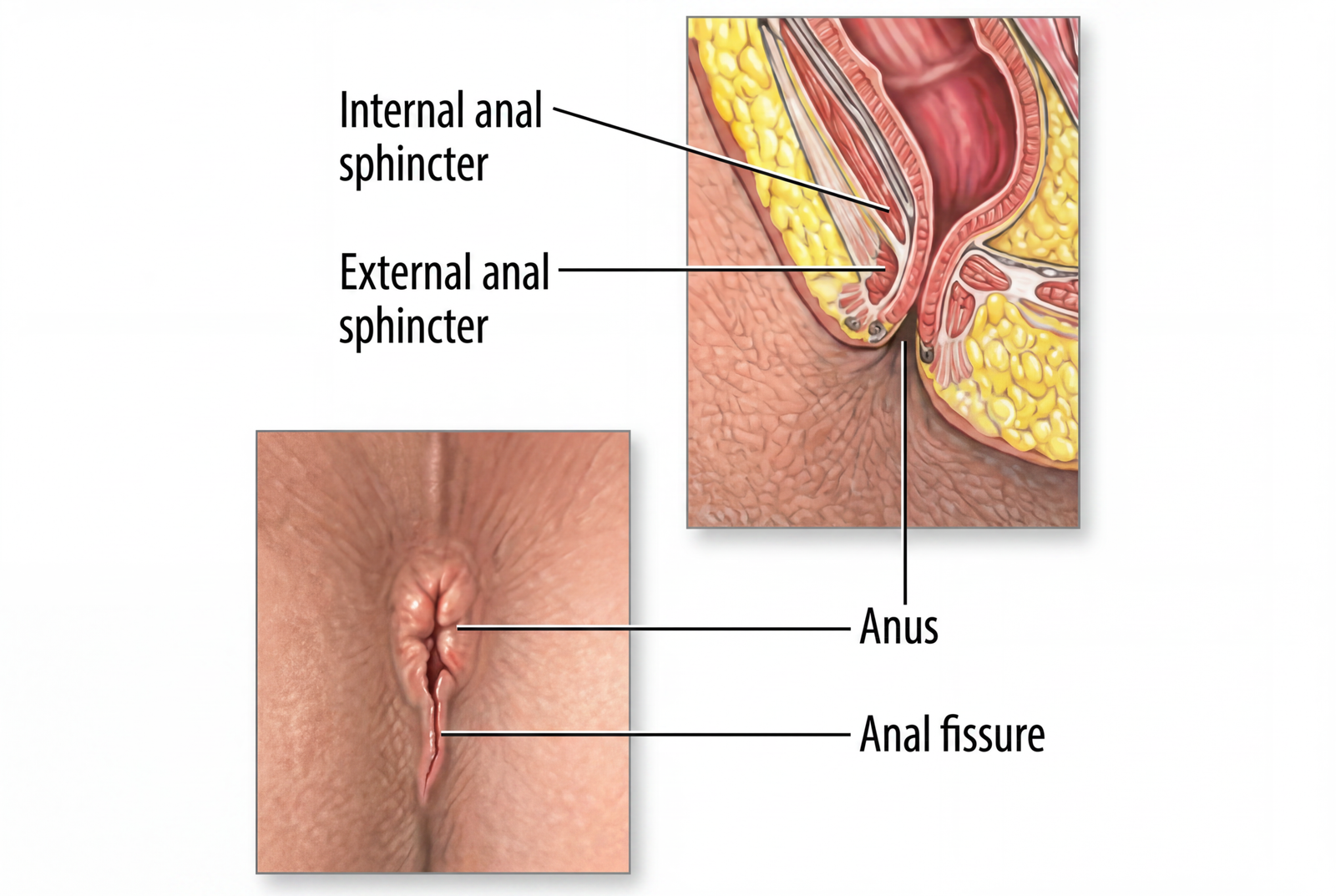
Fissure is created by stool tearing the anus, which is generally an acute, sharp pain. There may be associated muscle spasm, resulting in prolonged pain over hours.
The passage of difficult stool or severe diarrhea might tear the lining tissue with the anus. This dilemma is similar to having cracked lips in cold weather; blood vessels are exposed causing pain and bleeding during bowel movements.
Acute Fissure
A fresh tear that looks like a paper cut. Usually heals within 6 weeks with conservative care.
Chronic Fissure
Lasts longer than 6-8 weeks. May feature a small skin tag (sentinel pile) or exposed muscle fibers.
What is Symptoms?
A visible tear in the skin around the anus.
A skin tag, or small lump of skin, next to the tear.
Sharp pain in the anal area during bowel movements.
Anal fissures commonly bleed in infants.
Streaks of blood on stools or on tissue paper after wiping.
Burning or itching in the anal area.
Constipation: Can result in larger, harder stool causing further trauma.
Urinary Impact: Pain can cause discomfort when urinating (dysuria) or frequent urination.
Small amounts of bleeding, itching (pruritus ani), and malodorous discharge.
What is causes?
Some of the common causes include:
- Chronic constipation
- Passing a dry, hard stool
- Rough or excessive wiping
- Diarrhoea
- Inflammation of anus/rectum
- Crohn’s disease
- Scratching (e.g. pinworm)
- Anal injury
- Pregnancy & Childbirth
- Cancer of the rectum
Chronic constipation and chronic diarrhea can cause an anal fissure by repeatedly straining the lining of the anus.
Exams & Diagnosis
A gentle visual inspection is often enough. If the cause is unclear, advanced testing may be required:
How to
Treat Fissure?
The most important prerequisite to healing is to minimize pressure on the anus while passing stools and manage the pain during and after bowel movements.
"Fissures especially require professional treatment if they do not heal within six weeks."
Dietary Management
Make dietary changes for easier passage of stools. Avoid chilies and hard-to-digest foods. Stay hydrated with plenty of fluids and roughage.
Natural Remedies
Apply coconut oil, aloe compresses, or wheat germ oil. These natural products have antiseptic and healing qualities to speed up recovery.
Sitz Baths
Sit in warm water for 20 minutes, 3 times daily. This minimizes infection, improves blood circulation, and helps muscle recovery.
Hygiene & Care
Keep the area dry. Use soft facial tissues instead of toilet paper. Use chamomile/witch hazel infusions to help blood vessels shrink and heal.
Medical Relief
Physicians may prescribe local anaesthetics like Lidocaine cream, ointments, or suppositories to stop the pain in the anus.
Surgical (LIS)
If medications fail, Lateral Internal Sphincterotomy (LIS) involves a small cut to relieve pressure and stop painful spasms.