


HEMORRHOIDS
What is Hemorrhoids?
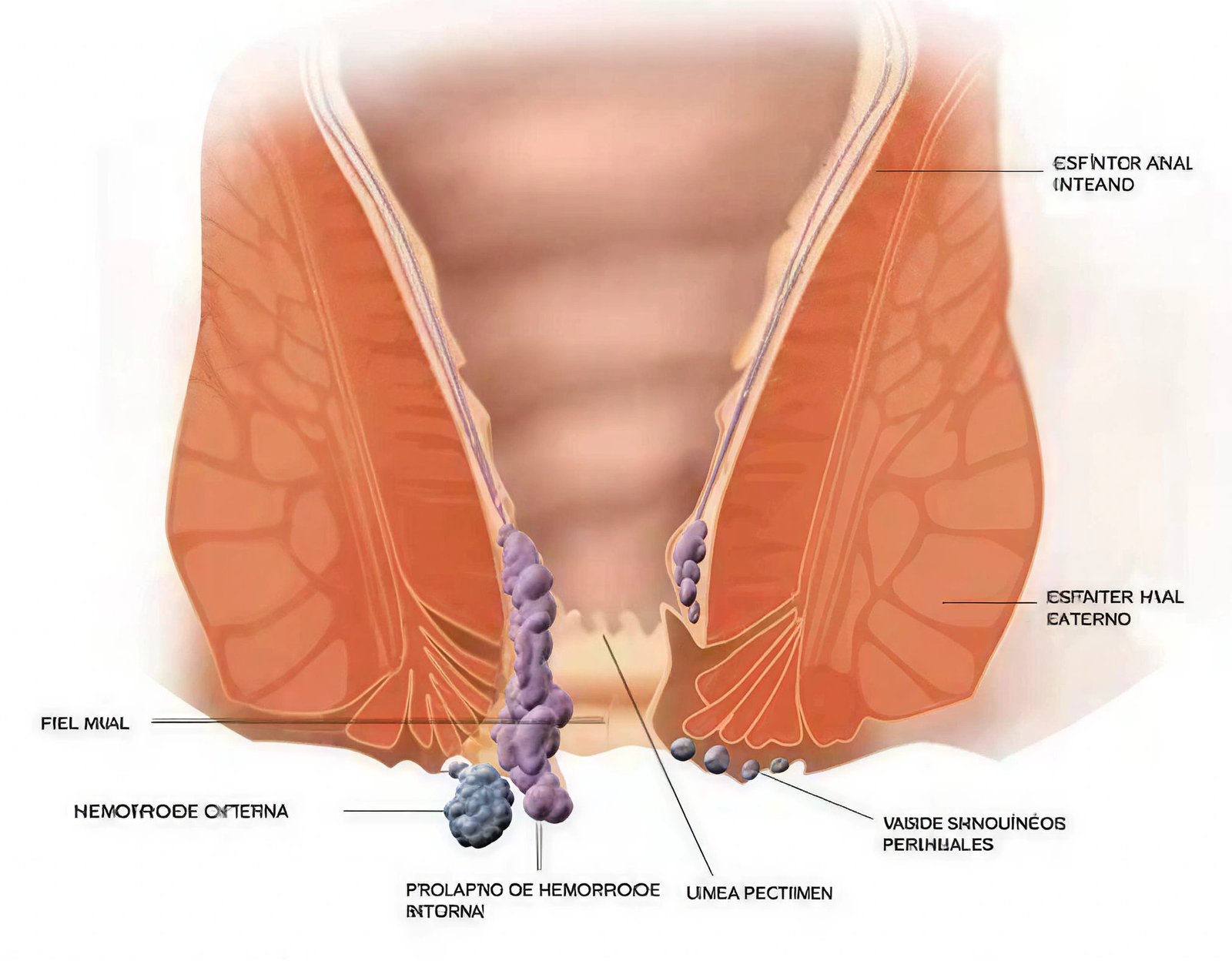
When the veins around the anus or in the rectum are swollen or inflamed is known as hemorrhoids. They can be internal or external, meaning inside the rectum and invisible, or outside the anus and visible.
Internal hemorrhoids can prolapse, appearing outside the body, while external hemorrhoids may become thrombosed, resulting in a painful blue or purple appearance.
Alternative Common Names
Common Causes
Straining during bowel movements.
Sitting for long periods on the toilet.
Chronic diarrhea or constipation.
Obesity and lack of weight management.
Pregnancy-related pressure and hormonal changes.
Anal intercourse leading to tissue irritation.
A diet low in fiber found in fresh produce.
Symptoms
Itching
Extreme itching around the anus.
Pain
Irritation and pain around the anal region.
Lumps
Itchy or painful swelling near the anus.
Leakage
Fecal leakage or incontinence.
Movements
A painful bowel movement experience.
Blood
Blood on tissue after bowel movement.
Signs
Painless bleeding during bowel movements — small amounts of bright red blood on toilet tissue or in the bowl.
Itching or irritation in your anal region, often persistent and bothersome.
General pain or discomfort, especially during sitting or physical activity.
Visible swelling around your anus that may feel tender to the touch.
Clinical Classification
First Degree
Piles & Masses
Inflamed cushions of tissue in the anal canal full of blood vessels and support tissue. Pain is minor and resolves in minutes.
Skin Tags
Small millimeter-long growths. Once formed, they typically don't get any bigger.
Second Degree
External Hemorrhoids
Found beneath the skin surrounding the anus. Visible outside and harmless until thrombosed.
Thrombosed Cases
Mild to moderate pain. Prolapsed with blood clots. May turn purple/blue and require immediate care.
Third Degree
Internal & Prolapsed
"Unbearable pain during and after bowel movements."
Leaves the rectum and protrudes outside. Feels like soft puffy pads, looks pinker than surrounding skin.
Often requires being pushed gently back into the rectum. Can lead to internal thrombosis and rectal bleeding.