


PROLAPSE OF RECTAL
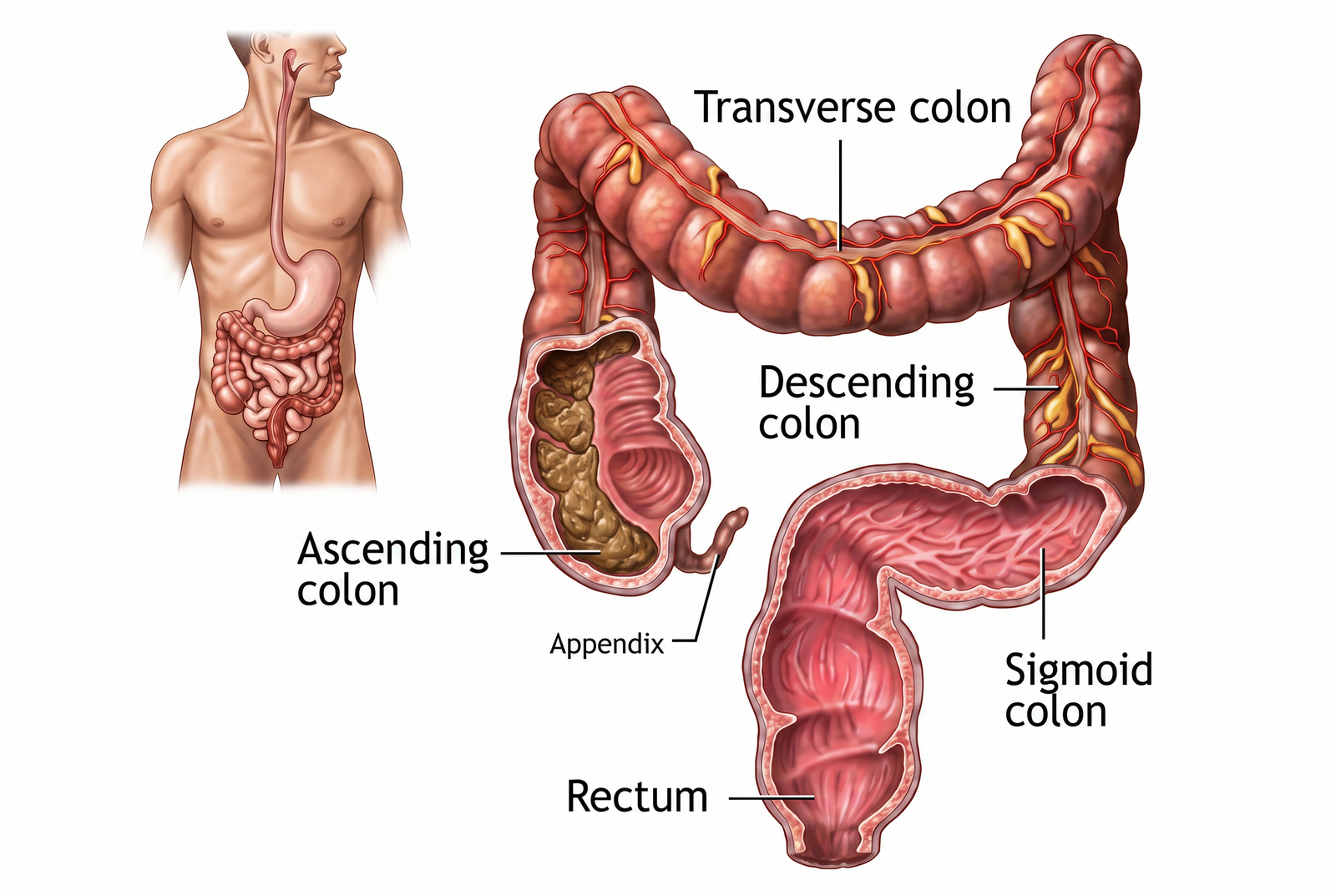
Rectal prolapse occurs when part or all of the wall of the rectum slides out of place, sometimes sticking out of the anus.
TYPES OF PROLAPSE
01. Partial Prolapse
Also called Mucosal Prolapse. The lining (mucous membrane) slides out and usually sticks out of the anus during straining. Most common in children under 2 years.
02. Complete Prolapse
The entire wall slides out of place and usually sticks out of the anus. Initially happens during bowel movements, eventually while standing or walking.
03. Internal Prolapse
Known as Intussusception. The wall slides into or over another part like a toy telescope. It does not stick out of the anus and is often related to polyps or tumours in adults.
Why Does It Occur?
Several factors contribute to rectal prolapse. It may come from a lifelong habit of straining during bowel movements or as a delayed result of childbirth stresses. It often appears as part of the aging process, involving weakened pelvic ligaments and loss of tightness in the anal sphincter.
What are the symptoms?
What causes rectal prolapse?
Childhood Risks
- • Cystic Fibrosis (Testing Advised)
- • Prior Infant Anal Surgery
- • Malnutrition & Nutrient Deficiency
- • Physical Development Problems
- • Straining & Infections
Adult Risks
- • Straining from Constipation
- • Surgery or Childbirth Damage
- • Age-related Pelvic Muscle Weakness
- • Lifelong Habitual Straining
Hemorrhoid vs. Prolapse
Symptoms are similar to hemorrhoids; however, rectal prolapse originates higher in the body. If left untreated, leaking stool worsens and the rectum may suffer permanent damage.
How to prevention?
Home treatment for adults may help treat the prolapse and may be tried before other types of treatments.
Avoid Constipation
Drink plenty of water and eat fruits, vegetables, and fiber-rich foods. Dietary changes can often reverse partial mucosal prolapse.
Kegel Exercises
Regularly perform Kegel exercises to strengthen pelvic floor muscles, providing better internal support for the rectum.
No Straining
Avoid straining during bowel movements. Use stool softeners to reduce pressure and prevent tissue displacement.
Important Medical Advisory
See a doctor if you or your child has symptoms of rectal prolapse. If left untreated, leaking stool could get worse, or the rectum could suffer permanent damage.