


SENTINEL PILES
What is Sentinel piles?
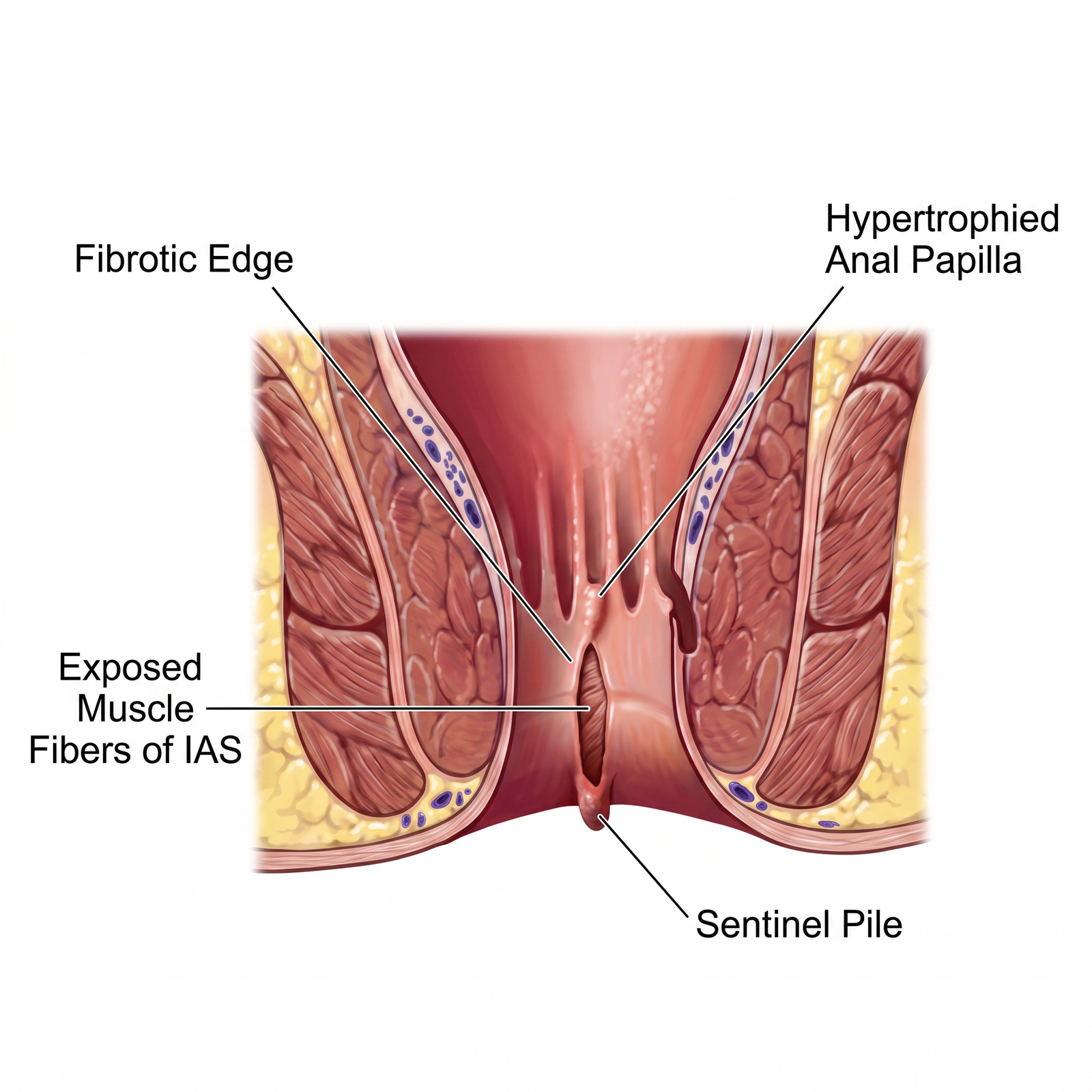
The swelling at the lower end of a chronic anal fissure, palpable as an anal mass, which may be the first or most prominent manifestation of a fissure.
Sentinel piles (also called sentinel skin tags) are common and usually harmless growths that hang off the skin around the outside of the anus. They are not contagious but may trap moisture and cause irritation.
Skin Tags
Hypertrophied papillae or fibro epithelial polyps.
Non-Contagious
Usually harmless but affects hygiene maintenance.
What is Symptoms?
Pain & Swelling
Common symptoms are swelling around the anus and a constant, throbbing pain.
Bowel Movements
Severe pain during movements and a feeling of incomplete bowel emptying.
Visual Signs
Painless bleeding, anal itching, and feeling a lump at the anus.
Associated Indicators
Constant Pain
Anal Itching
Palpable Lump
Painless Bleeding
Constipation
WHAT IS CAUSES?
Understanding the root cause is the first step towards effective treatment and prevention.
Inflammation of the anus and rectum.
Anal injury or skin left after hard stool passage.
Chronic constipation and excessive straining.
Physical trauma during childbirth.
Continuous pressure leading to skin thickening.
Secondary skin infections from hygiene difficulty.
Sexually transmitted infections (STIs).
Faecal incontinence and related irritation.
How to its prevention?
Lifestyle changes to reduce symptoms and prevent episodes in susceptible individuals:
Exercise: Regular physical exercise helps in weight reduction and regular bowel movements.
Softeners: Stool softeners correct constipation before it predisposes to piles.
Medication: Avoid drugs predisposing to constipation, like cough syrups with codeine.
Additional Precautions
Treat underlying conditions like chronic cough, ascites, and liver disease.
Avoid excessive pressure to "finish" after you have already passed the stool.
Practice good hygiene to prevent moisture traps and secondary skin infections.
WHAT IS TREATMENT?
While small tags may resolve, large or problematic tags require clinical intervention.
Prescription of pain medication and antibiotics to manage infection risk.
Adherence to a soft or liquid diet to ease bowel passage during healing.
Surgical removal may be necessary if tags cause hygiene or comfort problems.
Management of recurring pain, acidity, or body pain associated with the condition.
Addressing the feeling of incomplete emptying and anal irritation.