

What is Ulcerative Colitis?
Ulcerative colitis and Crohn's disease are the most common types of inflammatory bowel disease. Ulcerative colitis affects only the colon and rectum.
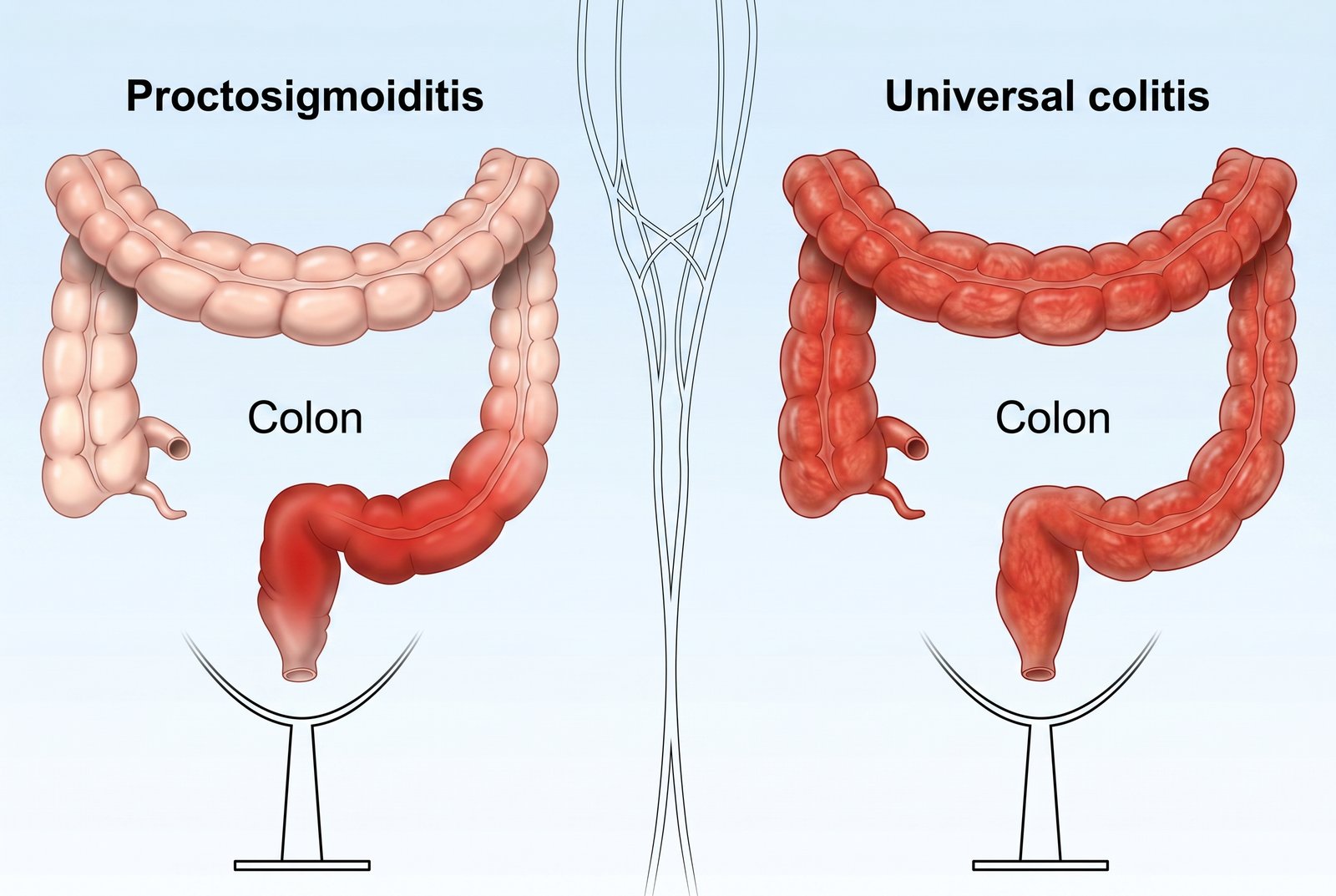
What is Causes
The cause of ulcerative colitis is uncertain. Researchers believe that the body's immune system reacts to a virus or bacteria, causing ongoing inflammation in the intestinal wall.
Other Organs Involved:
What is Symptoms?
Diarrhea & Urgency
10 to 20 times a day. The urge may wake you up at night.
Rectal Bleeding
Bloody diarrhea and mucus, often accompanied by rectal pain.
Belly Pain
Cramping and soreness when the belly is touched.
Systemic Effects
Loss of appetite, fever, weight loss, and anemia (due to blood loss).
Diagnostic Testing
Stool sample testing to look for blood, infection, and white blood cells.
Diagnostic Advice
Symptoms can vary based on the severity of inflammation and where it occurs. Constipation is much less common than diarrhea but can develop.
How is it
treated?
Ulcerative colitis affects everyone differently. Your doctor will help you find treatments that reduce symptoms and avoid new flare-ups.
Over-the-counter medicines (e.g., Imodium)
Avoid trigger foods while eating healthy
Treatment Protocols
- 01. Prescription: Aminosalicylates, steroid medicines, or immune response reducers.
- 02. Surgery: Removing the colon can cure UC and prevent colon cancer if medications fail.
- 03. Flare-up Prevention: Consistent medication stops or reduces recurring symptoms.
- 04. Professional Guidance: Always talk to your doctor before taking OTC medicines.